## Not a Future Plan — It Is Happening Now
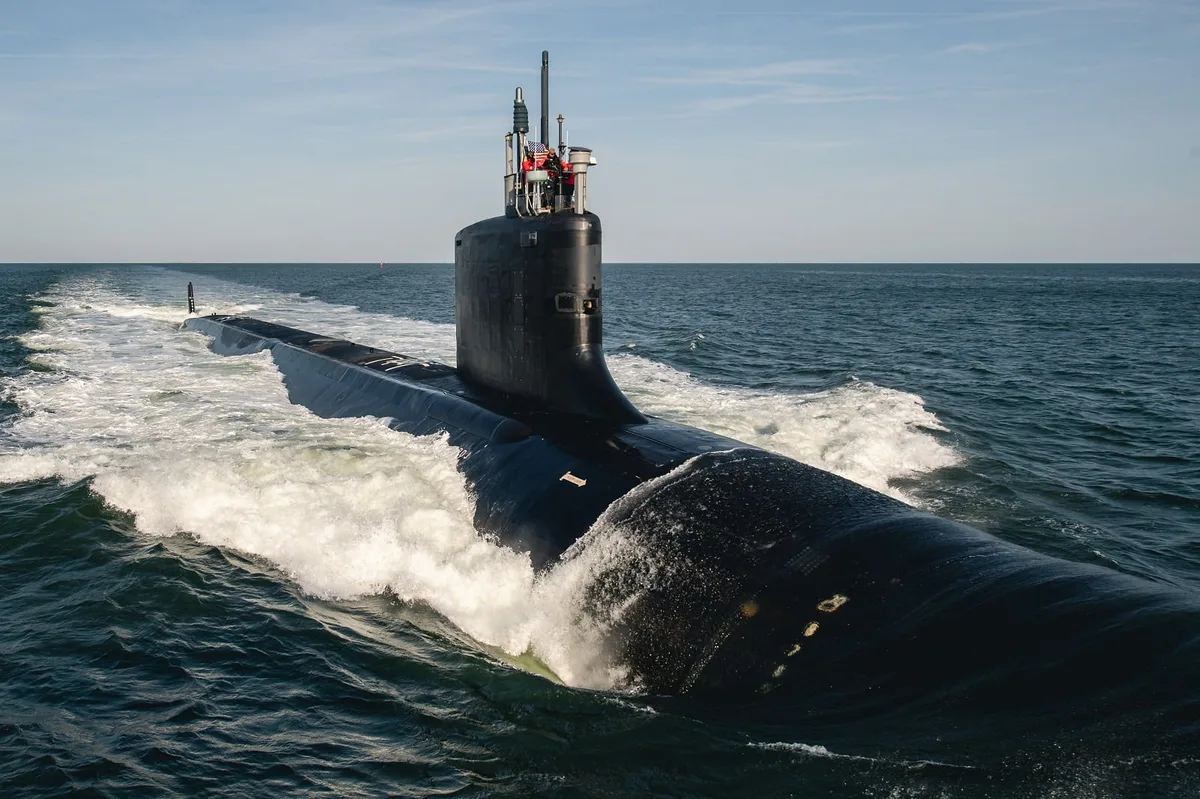
The most important thing to understand about the AUKUS submarine pathway is that it has already begun. The Submarine Rotational Force–West (SRF-W) at HMAS Stirling, Garden Island, Western Australia, is not a concept or a future milestone — it is an operational reality in 2026. US Navy Virginia-class nuclear-powered submarines are rotating through Australian waters, and the Royal Australian Navy is building the skills, infrastructure, and industrial base to support them.
US Chief of Naval Operations Admiral Daryl Caudle visited Western Australia in March 2026 and confirmed that WA will house the first nuclear-powered submarine by 2034 under the AUKUS agreement. But submarines are already visiting HMAS Stirling as part of SRF-W rotations, with HMS Anson — a Royal Navy Astute-class boat — completing its first visit Down Under in early 2026.
## What SRF-W Means in Practice
The SRF-W arrangement, formalised under the AUKUS Optimal Pathway announced in March 2023, establishes a rotational presence of US and UK submarines at HMAS Stirling from 2027, with the rotation increasing in frequency and duration through the late 2020s and early 2030s. The arrangement serves multiple purposes:
**Skills transfer** — RAN personnel are embedded with US and UK submarine crews, accelerating the development of the nuclear-qualified workforce Australia will need to operate its own boats.
**Infrastructure validation** — Each rotation tests and refines the maintenance, logistics, and support systems at HMAS Stirling, identifying gaps before Australia's own submarines arrive.
**Strategic signalling** — A persistent allied submarine presence in Western Australia demonstrates deterrence in the Indo-Pacific without waiting for Australia's own nuclear-capable fleet.
**Industrial readiness** — Australian SMEs are beginning to support visiting submarines, with Franmarine becoming one of the first Australian companies to provide in-country maintenance support to a Royal Navy Astute-class submarine in 2026.
## The Industrial Opportunity Is Now
The arrival of allied submarines at HMAS Stirling is not just a strategic milestone — it is a live procurement signal for Australian industry. Submarines require constant maintenance, and the SRF-W arrangement means that demand for Australian industrial support is real and immediate, not hypothetical.
Franmarine's work supporting HMS Anson is a proof of concept. Australian companies that can demonstrate the security clearances, technical competence, and quality management systems required to work on nuclear-propelled vessels will be positioned to capture an expanding stream of sustainment work as the rotation frequency increases.
The security requirements are significant. Companies working on or near nuclear-propelled submarines require DISP membership at an appropriate level, with personnel holding security clearances commensurate with the classification of information they access. Facility security clearances may also be required for companies providing on-site maintenance support.
## The 2027 Milestone
The formal establishment of SRF-W as a permanent rotational arrangement in 2027 represents a step-change in the pace of activity. From that point, the rotation of US Virginia-class submarines through HMAS Stirling will be a regular, planned event — not an occasional visit. This will drive sustained demand for:
- Submarine maintenance and repair services
- Logistics and supply chain support
- Specialist engineering and technical services
- Security-cleared personnel in Western Australia
Australian companies that begin their DISP compliance journey now will be positioned to compete for this work when the 2027 rotation schedule is formalised. Those that wait will find themselves locked out of the first wave of contracts.
## The Broader Context
The SRF-W is one element of a broader AUKUS industrial ecosystem that includes the Henderson Defence Precinct master plan (awarded to Bechtel in March 2026), the $127 million initial planning investment, and the long-term commitment to build a world-class submarine sustainment hub in Western Australia. The pieces are coming together faster than many in industry realise.
For Australian defence contractors, the message is clear: the AUKUS submarine program is not a 2040s story. It is a 2026 story, and the window to position for the first wave of opportunities is open now.
*Source: The West Australian, 24 March 2026; USNI News, 26 March 2026; AIDN, 9 April 2026; WA Government, 12 March 2026; Royal Australian Navy.*
The most important thing to understand about the AUKUS submarine pathway is that it has already begun. The Submarine Rotational Force–West (SRF-W) at HMAS Stirling, Garden Island, Western Australia, is not a concept or a future milestone — it is an operational reality in 2026. US Navy Virginia-class nuclear-powered submarines are rotating through Australian waters, and the Royal Australian Navy is building the skills, infrastructure, and industrial base to support them.
US Chief of Naval Operations Admiral Daryl Caudle visited Western Australia in March 2026 and confirmed that WA will house the first nuclear-powered submarine by 2034 under the AUKUS agreement. But submarines are already visiting HMAS Stirling as part of SRF-W rotations, with HMS Anson — a Royal Navy Astute-class boat — completing its first visit Down Under in early 2026.
## What SRF-W Means in Practice
The SRF-W arrangement, formalised under the AUKUS Optimal Pathway announced in March 2023, establishes a rotational presence of US and UK submarines at HMAS Stirling from 2027, with the rotation increasing in frequency and duration through the late 2020s and early 2030s. The arrangement serves multiple purposes:
**Skills transfer** — RAN personnel are embedded with US and UK submarine crews, accelerating the development of the nuclear-qualified workforce Australia will need to operate its own boats.
**Infrastructure validation** — Each rotation tests and refines the maintenance, logistics, and support systems at HMAS Stirling, identifying gaps before Australia's own submarines arrive.
**Strategic signalling** — A persistent allied submarine presence in Western Australia demonstrates deterrence in the Indo-Pacific without waiting for Australia's own nuclear-capable fleet.
**Industrial readiness** — Australian SMEs are beginning to support visiting submarines, with Franmarine becoming one of the first Australian companies to provide in-country maintenance support to a Royal Navy Astute-class submarine in 2026.
## The Industrial Opportunity Is Now
The arrival of allied submarines at HMAS Stirling is not just a strategic milestone — it is a live procurement signal for Australian industry. Submarines require constant maintenance, and the SRF-W arrangement means that demand for Australian industrial support is real and immediate, not hypothetical.
Franmarine's work supporting HMS Anson is a proof of concept. Australian companies that can demonstrate the security clearances, technical competence, and quality management systems required to work on nuclear-propelled vessels will be positioned to capture an expanding stream of sustainment work as the rotation frequency increases.
The security requirements are significant. Companies working on or near nuclear-propelled submarines require DISP membership at an appropriate level, with personnel holding security clearances commensurate with the classification of information they access. Facility security clearances may also be required for companies providing on-site maintenance support.
## The 2027 Milestone
The formal establishment of SRF-W as a permanent rotational arrangement in 2027 represents a step-change in the pace of activity. From that point, the rotation of US Virginia-class submarines through HMAS Stirling will be a regular, planned event — not an occasional visit. This will drive sustained demand for:
- Submarine maintenance and repair services
- Logistics and supply chain support
- Specialist engineering and technical services
- Security-cleared personnel in Western Australia
Australian companies that begin their DISP compliance journey now will be positioned to compete for this work when the 2027 rotation schedule is formalised. Those that wait will find themselves locked out of the first wave of contracts.
## The Broader Context
The SRF-W is one element of a broader AUKUS industrial ecosystem that includes the Henderson Defence Precinct master plan (awarded to Bechtel in March 2026), the $127 million initial planning investment, and the long-term commitment to build a world-class submarine sustainment hub in Western Australia. The pieces are coming together faster than many in industry realise.
For Australian defence contractors, the message is clear: the AUKUS submarine program is not a 2040s story. It is a 2026 story, and the window to position for the first wave of opportunities is open now.
*Source: The West Australian, 24 March 2026; USNI News, 26 March 2026; AIDN, 9 April 2026; WA Government, 12 March 2026; Royal Australian Navy.*